
Article · 5 min read
How Much Is My Basketball Card Worth?
· By the Sports Card Value Scanner team
Quick answer
A basketball card is worth what similar copies have recently sold for, and that depends mostly on the player, rookie status, scarcity and condition. Base cards of role players rarely sell for much, while rookie cards of stars, low-numbered parallels and autographs can sell for much more. Identify the exact card and compare recent sold listings in similar condition. Or scan it with a basketball card scanner app like Sports Card Value Scanner to get a value range and rarity score in seconds.
A basketball card is worth what recent buyers paid for the same card in the same condition, and that price is driven mostly by the player. Collector demand in basketball is concentrated on a small group of stars, so their cards, and especially their rookie cards, can be worth many times more than teammates' cards from the same set. Scarcity is the next factor: parallels, serial-numbered cards, autographs and patch cards are printed in smaller quantities than base cards. Condition matters most on chrome cards like Prizm, where surface scratches lower the grade. Base cards from the heavy-production years of the late 1980s and 1990s are mostly worth little, with some rookies and inserts as exceptions. Identify the exact card, check sold listings, and use a scanner app to sort a large stack quickly.
| Main driver | The player: demand centres on a small group of stars |
|---|---|
| Most valuable versions | Rookie cards, low-numbered parallels, autographs and patches |
| Famous 1980s set | 1986–87 Fleer |
| Condition watch-out | Chrome cards such as Prizm show surface scratches easily |
| Price from | Sold listings for the exact card and parallel |
Why do basketball cards vary so much in value?
Basketball demand is very star-driven. Collectors chase a relatively small group of players, so cards of those players can be worth many times more than cards of their teammates from the same set. On top of that, modern sets come in dozens of versions, so the exact card matters as much as the player. Michael Jordan is the clearest case: see Michael Jordan rookie card value for how far one player's cards can range.
| Card type | What it is | Typical value impact |
|---|---|---|
| Base card | The standard card in a set | Usually low unless it's a star rookie |
| Rookie card (RC) | The player's first licensed cards | Often the player's most valuable base-level card |
| Parallel | Same design, different colour or finish (e.g. Silver Prizm) | Higher, especially with low print runs |
| Serial-numbered | A stamped print run such as 10/99 | Scarcer; lower numbers are generally worth more |
| Autograph or patch | A signed card or a jersey swatch | Premium, especially rookie autographs |
| Graded | Authenticated and condition-graded by PSA, BGS or SGC | High grades of key cards carry big premiums |
How do you find out what a basketball card is worth?
Identify the card, check for parallels and serial numbers, inspect the condition and compare sold listings for the exact card and parallel.
- 1
Identify the card
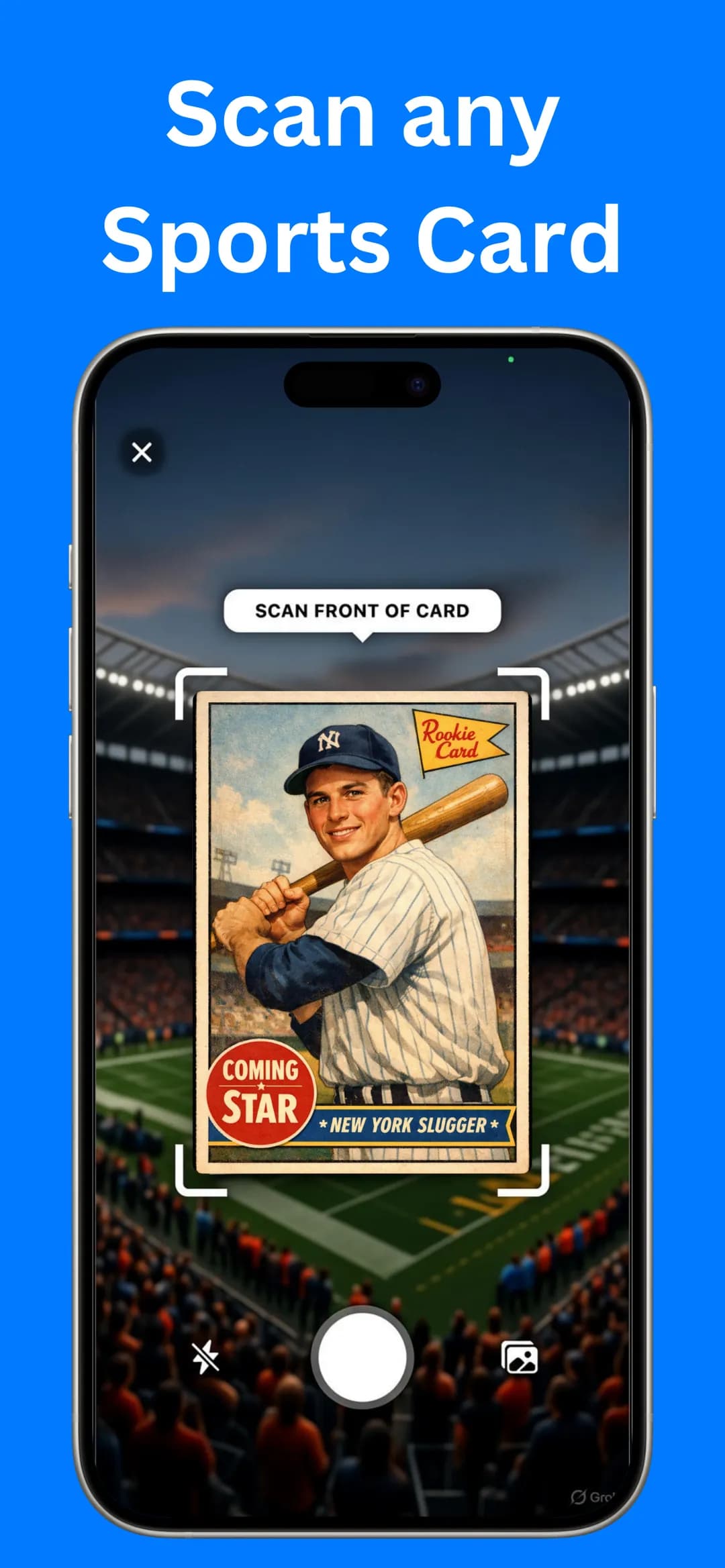
Note the player, year, brand, set and card number from the back, or scan the front with your phone.
- 2
Check for parallels and numbering
Look at the border colour and the finish, and check the back for a serial number. A refractor or numbered parallel is a different card from the base version.
- 3
Inspect the condition
Check the corners, edges, surface and centering under good light. Chrome cards like Prizm show surface scratches easily, which lowers their grade.
- 4
Compare sold listings
Search for the exact card and parallel on eBay, filter to sold items and compare cards in similar condition. Here's the full method.
Can a basketball card scanner app tell you what a card is worth?
A basketball card scanner app takes care of the identification step and gives you a starting value. Sports Card Value Scanner identifies the card from a camera shot or a gallery photo and shows:
- The player and card details, including the year and set.
- A Reference Price range and estimated eBay values.
- A Rarity Score from Common to Ultra Rare.
- Card Information with the sport, year issued, series and card number.
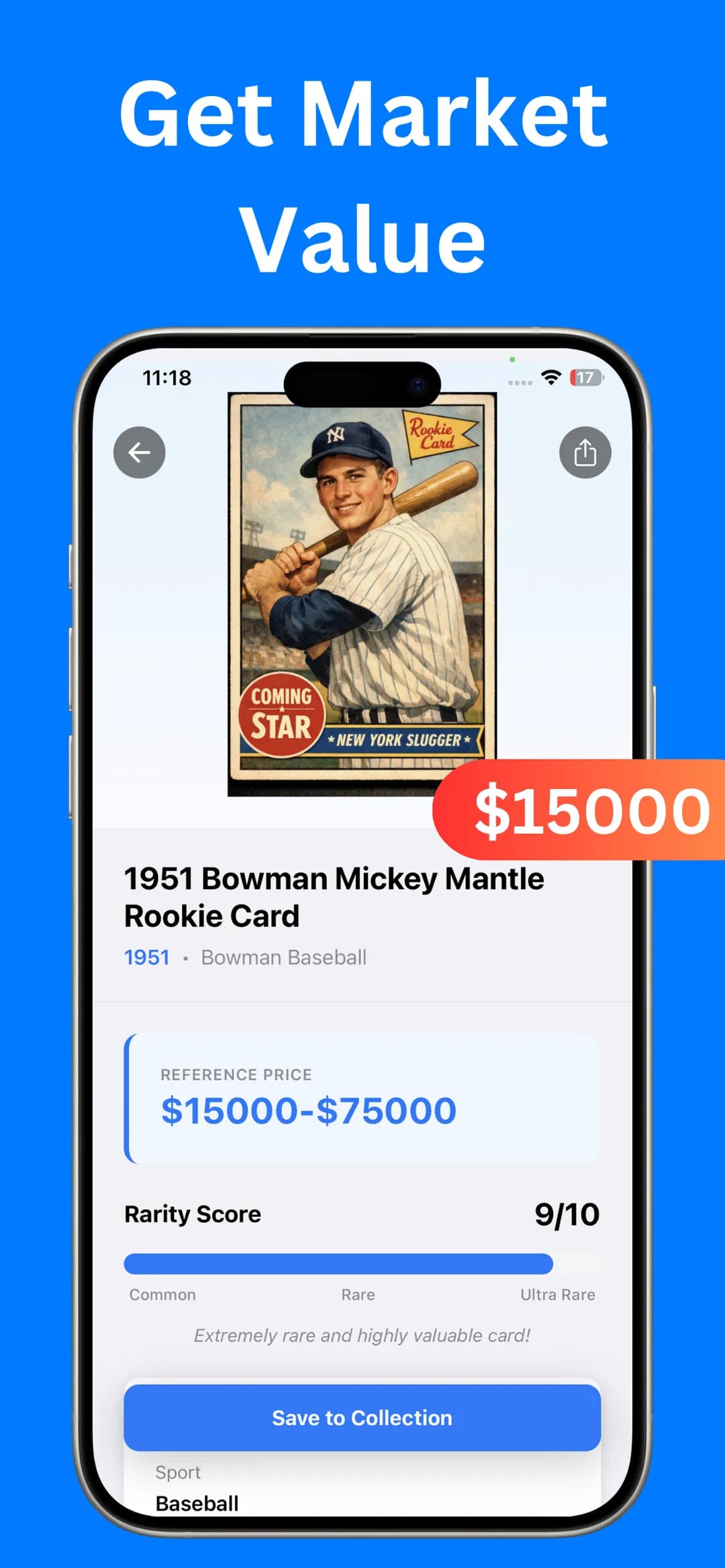
As a basketball card value app, it also stores your cards in My Collection, so you can see what a whole binder of basketball cards adds up to.
Which basketball card eras are most valuable?
Vintage cards from before the 1980s and modern rookie autographs, patches and numbered parallels hold the most value, while most late 1980s and 1990s base cards are worth little.
- Vintage (before the 1980s): fewer sets and lower print runs. Stars and rookies can be valuable, depending on condition.
- 1980s: the 1986–87 Fleer set is the most famous of the decade, but many other 1980s cards are inexpensive.
- Late 1980s to 1990s: heavy production and lots of inserts. Base cards are mostly low value, while certain inserts and rookies remain in demand.
- 2000s to today: rookie autographs, patch cards, chrome sets and serial-numbered parallels drive the high end. Base cards are plentiful.
What should you check before you sell or grade a basketball card?
Check the exact version and recent sold prices first, because prices for active players can swing with a hot streak, an injury or a trade. If a card scans with a high rarity score, sleeve it, confirm the exact version and check recent sold prices before you decide. Grading usually pays off only for high-demand cards in excellent condition. For a quick checklist, read how to tell if a sports card is valuable. For first-year cards, see how much is my rookie card worth.
Also collect other sports? Compare with football card values and baseball card values.
Frequently asked questions
What app tells you what basketball cards are worth?
Sports Card Value Scanner is a basketball card scanner app for iPhone, iPad and Android. Scan the card or pick a photo, and it shows the card details, a reference price range, estimated eBay values and a rarity score.
Are basketball cards from the 1990s valuable?
Most 1990s base cards are worth little, but some rookies, inserts and parallels from that era are still in demand, especially in high grade. Scan your stack to find the ones worth a closer look.
Sources

Find out what your cards are worth
Scan your first card in seconds. Get the card details, a reference price range and a rarity score, then build a collection you can track.


4.5★ App Store (75) · 4.4★ Google Play (79) · Free to download