
Step-by-step guide · 6 min read
How to Get Sports Cards Graded, Step by Step
· By the Sports Card Value Scanner team
Quick answer
To get cards graded, choose the cards where a high grade is worth clearly more than the fee, check their condition yourself, then submit them to a grading company such as PSA, BGS or SGC. You create an account on the company's website, pick a service level, declare a value for each card, pack the cards in penny sleeves and semi-rigid holders, and ship them insured. They come back sealed in a slab with a grade from 1 to 10.
Grading is a paid service where a company checks that a card is genuine, rates its condition on a 1 to 10 scale and seals it in a tamper-evident plastic case called a slab. If you're working out how to get cards graded, the process is much the same at every major company. You decide which cards are worth sending, look them over for flaws, build an order on the grader's website, choose a service level based on how fast you want them back and how much they're worth, then pack and ship them. Fees, turnaround times and membership rules change often, so check the grader's current price list before you start. The most important step happens before any of that: picking cards where the graded value clearly beats the raw value plus the cost of grading and shipping.
| Major graders | PSA, Beckett (BGS) and SGC; CGC also grades sports cards |
|---|---|
| Grade scale | 1 to 10, sealed in a tamper-evident slab |
| What graders judge | Centering, corners, edges and surface |
| How to pack | A penny sleeve inside a semi-rigid holder such as a Card Saver I |
| Turnaround | Days to months, depending on the company and service level |
Step 1: Which cards are worth grading?
Grading costs money and time, so it only pays on cards that are in demand and in very good condition. Good candidates are rookie cards of stars, vintage cards of popular players, low serial-numbered parallels and autographs. Base cards of common players almost never earn back the fee, even with a perfect grade.
Here's a quick test. Look up recent sold prices for your card raw and in the grades you think it could get. If a 9 sells for barely more than a raw copy, grading won't help. Our article on whether it's worth getting cards graded walks through the math.
Step 2: How do you pre-grade a card yourself?
To pre-grade a card, check its centering, corners, edges and surface under bright light, ideally with a loupe, since those are the four things graders judge.
You can't give a card an official grade at home, but you can catch the flaws a grader will see. This is how to grade sports cards yourself before you pay anyone:
- Centering. Compare the border widths left to right and top to bottom. Uneven borders are the most common reason a sharp-looking card misses a 10.
- Corners. Look for any rounding, fraying or white showing at the tips.
- Edges. Check for chipping, especially on dark-bordered and chrome cards.
- Surface. Tilt the card under a bright light to spot scratches, print lines, dents and fingerprints.
A phone flashlight and a cheap loupe are enough. Be harsher than feels natural. If you find more than one clear flaw, the card probably won't reach the grade that makes submitting worthwhile. The PSA grading scale explains what each grade allows.
Step 3: Which grading company should you use?
For most sports cards, use PSA, because PSA slabs usually sell for the most on the resale market. Beckett (BGS) and SGC are the other names most collectors use, and CGC also grades sports cards. BGS adds four subgrades and a Black Label for perfect cards, and SGC is a favourite for vintage. Our PSA vs BGS vs SGC comparison covers the differences.
Step 4: How do you submit cards for grading?
Create an account on the grader's website, choose a service level, declare a value for each card and print the submission form to send with your cards.
- 1
Create an account
Sign up on the grader's website. For example, here's how to get cards graded by PSA: you create an account at psacard.com and use its online submission center. Some cheaper service levels have required a paid membership in the past, so check the current rules.
- 2
Choose a service level
Service levels differ by price, turnaround time and the maximum declared value per card. Every card on one order usually has to use the same level, so put cheaper and pricier cards on separate orders.
- 3
Declare a value for each card
Enter what each card would sell for in the grade you expect. The declared value decides which service levels the card qualifies for, and it's generally the most the company will pay if the card is lost or damaged.
- 4
Print the submission form
Print the form at the end of checkout. It goes in the box with your cards.
Step 5: How should you pack cards for grading?
Put each card in a clean penny sleeve, then slide it into a semi-rigid holder such as a Card Saver I. Most graders, PSA included, ask for semi-rigids rather than top loaders, screw-downs or magnetic cases, because staff can remove the cards safely. Stack the holders, sandwich them between pieces of cardboard, and fill the box so nothing moves.
Ship with tracking and insurance that covers the declared value, and write the order number wherever the instructions say. Then wait. Turnaround can be days or months depending on the company and the service level.
What happens after you send cards for grading?
The company logs your order, checks each card for authenticity and alterations, grades it and seals it in a slab with a label and a certification number. You can follow progress in your account. When the cards come back, look up each cert number on the grader's website; buyers will do the same before they pay.
Cards found to be trimmed, recoloured or otherwise altered usually come back without a numeric grade. A card can also come back with a qualifier, such as OC for off-center, which lowers its value compared with the same grade without one.
How can a scanner app help you decide what to grade?
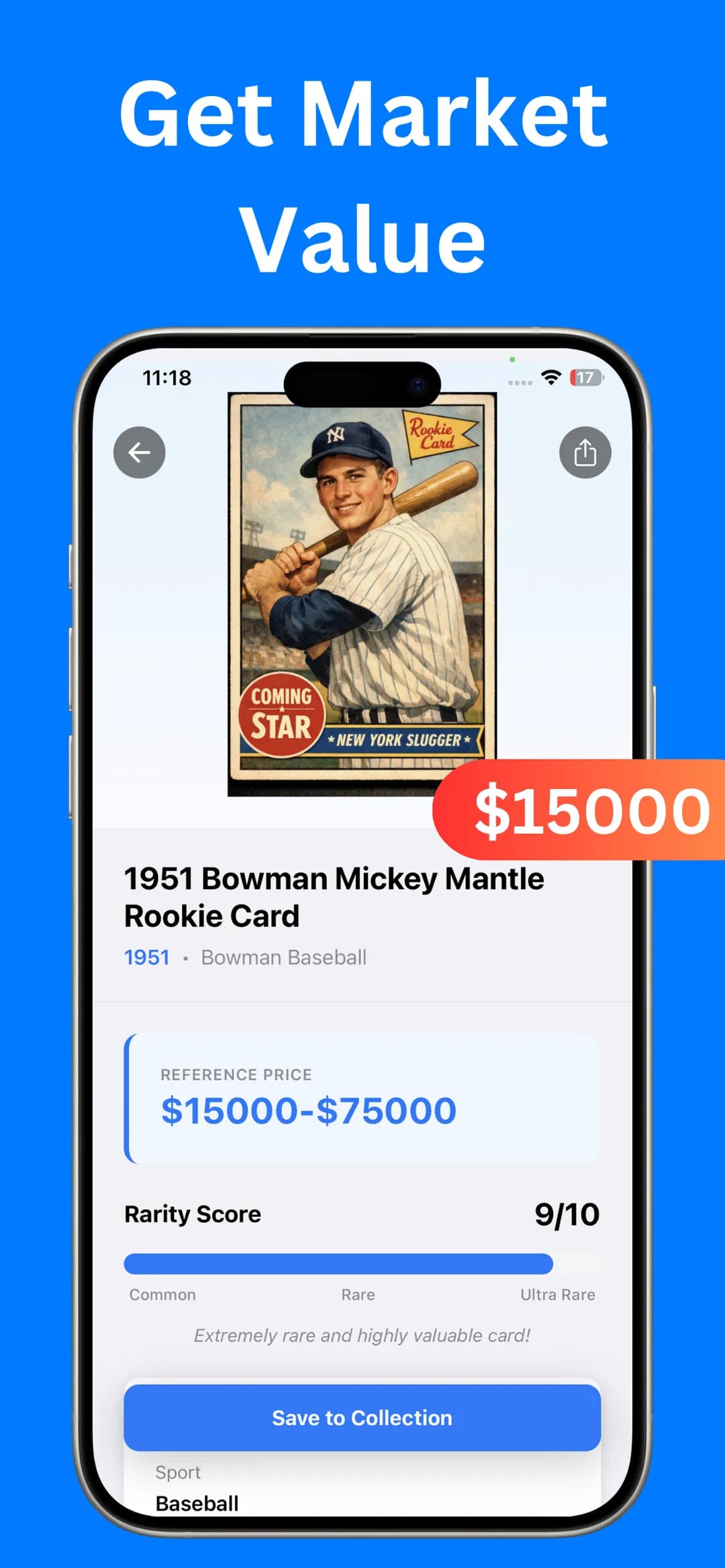
Most of the work in grading is choosing the right cards. Sports Card Value Scanner doesn't grade cards, but it helps with that first cut. Scan a stack and each result shows the card's year, set and card number, a reference price range and a rarity score out of 10. Cards with a high value range and rarity score are the ones worth pre-grading and pricing in graded condition.
Frequently asked questions
How long does it take to get cards graded?
It depends on the company and the service level you pay for, and faster tiers cost more. Turnaround can range from a few days to several months. Each grading company publishes current estimates on its website, and our PSA grading backlog update covers PSA's 2026 queue.
Can I get cards graded for free?
No. Grading companies charge per card, plus shipping and insurance. Some card shops and shows run group submissions that can lower the cost per card, but you still pay a fee.
Should I grade a card that's slightly off-center?
Usually not, unless it's a valuable card where even a mid grade sells well. Centering can't be fixed, so an off-center card is likely to miss the top grades that make grading pay.
Sources

Find out what your cards are worth
Scan your first card in seconds. Get the card details, a reference price range and a rarity score, then build a collection you can track.


4.5★ App Store (75) · 4.4★ Google Play (79) · Free to download