
Comparison · 6 min read
PSA vs BGS vs SGC: Which Card Grading Company Should You Use?
· By the Sports Card Value Scanner team
Quick answer
PSA is the default choice for most sports cards because PSA slabs usually sell for the most and are the easiest to resell. BGS (Beckett) suits modern cards that could score perfectly, since it adds four subgrades and a Black Label for perfect cards. SGC is popular for vintage and pre-war cards, and many collectors like its look and value. All three grade on a 1 to 10 scale.
PSA, Beckett Grading Services (BGS) and SGC all authenticate cards, grade them on a 10-point scale and seal them in a tamper-evident slab, but they differ in ways that affect value. PSA gives a single overall grade and has the biggest share of the market, so its slabs tend to sell for the highest prices and have the deepest pool of buyers. BGS gives four subgrades, for centering, corners, edges and surface, plus an overall grade in half points. A 10 with four perfect subgrades earns the Black Label, one of the most prized slabs in the hobby. SGC is known for its vintage expertise and its black tuxedo-style label, and many collectors use it for pre-war and vintage cards. Fees, turnaround times and resale gaps change over time, so check current prices and recent sold listings for your card in each company's slab before you choose.
| Scale | All three grade from 1 to 10 |
|---|---|
| Best resale | PSA, in most cases |
| Subgrades | BGS: centering, corners, edges and surface; four perfect 10s earn the Black Label |
| Vintage favourite | SGC, known for its black tuxedo label |
| Newer graders | CGC (Pristine 10 and Gem Mint 10) and TAG (a 1,000-point score) |
How do PSA, BGS and SGC compare?
PSA usually brings the highest resale prices, BGS adds subgrades and the Black Label for near-perfect modern cards, and SGC is a favourite for vintage. All three grade on a 1 to 10 scale.
| Feature | PSA | BGS (Beckett) | SGC |
|---|---|---|---|
| Scale | 1–10, half grades up to 8.5 | 1–10 in half points, with four subgrades | 1–10 in half points |
| Top grade | 10 Gem Mint | 10 Pristine; Black Label with four perfect subgrades | 10 |
| Known for | Resale value and liquidity | Subgrades and Black Labels on modern cards | Vintage and pre-war cards |
| Label look | Red and white | Colour-coded labels | Black tuxedo insert |
| Typical choice | Most sports cards, especially to sell | High-end modern cards that might grade perfectly | Vintage cards and value-minded submitters |
Why is PSA the most popular grading company?
PSA is the largest grading company and the one most buyers look for first. Its slabs usually sell for the most at the same grade, and its pop reports and price data are the most widely used. The trade-offs are cost and, at busy times, turnaround: in 2026 a backlog led PSA to pause its cheapest tiers, covered in our PSA grading backlog update. PSA gives one overall grade, with optional qualifiers like OC for off-center. Our article on the PSA grading scale explains every grade.
What makes BGS different?
Beckett Grading Services prints four subgrades on the label: centering, corners, edges and surface. That detail shows buyers why a card got its grade. BGS 9.5 is Gem Mint, BGS 10 is Pristine, and a 10 with all four subgrades at 10 earns the Black Label, which can sell for a large premium on modern cards. On the other hand, ordinary BGS grades, such as a 9.5 that isn't close to perfect, often sell for less than a PSA 10 of the same card.
Is SGC good for vintage cards?
Yes. SGC built its reputation on vintage and pre-war cards, and its black tuxedo label has become a favourite look for many collectors. The record-setting 1952 Topps Mickey Mantle, covered in most valuable sports cards, was graded SGC 9.5. With modern cards, SGC slabs often sell a little below PSA at the same grade, but SGC is a common choice for vintage, for display, and for submitters looking for value.
PSA vs SGC: which is better?
In the PSA vs SGC decision, resale is the main factor. For modern cards you plan to sell, PSA usually brings more money at the same grade. For vintage cards the gap is smaller, and SGC's vintage reputation and look make it a popular pick. If you're keeping the card, choose the slab you like best.
PSA vs BGS: which is better?
In the PSA vs BGS decision, think about how close to perfect the card is. A card with a real shot at four perfect subgrades could earn a Black Label, which beats a PSA 10 for many modern cards. For everything else, a PSA 10 or 9 usually sells better than the BGS equivalent. BGS subgrades are still useful if you want to know exactly where a card fell short.
Which grading company should you choose?
Choose PSA to sell most modern cards, BGS for a near-perfect modern card with a shot at a Black Label, and SGC or PSA for vintage.
- Selling a modern card: PSA, unless the card might get a Black Label.
- A nearly perfect modern card: BGS, for the chance at a Black Label.
- Vintage or pre-war: SGC or PSA. Compare recent sales for your card in both slabs.
- Keeping the card: whichever slab you prefer, as long as the grader is reputable.
What about CGC and TAG?
CGC and TAG are newer options with smaller resale markets than PSA. CGC Cards, from the company best known for grading comics, grades sports, trading card game and non-sport cards on a 10-point scale with two top grades. A Pristine 10 needs 50/50 centering and flawless colour and gets its own label, while a Gem Mint 10 allows centering up to about 55/45. In the CGC vs PSA choice for sports cards, PSA usually has the bigger resale market.
TAG grading uses imaging technology instead of relying only on a grader's eye. Each card gets a precise score out of 1,000 that converts to the usual 1 to 10 grade, plus a digital report, opened from a QR code on the slab, with images showing what affected the grade. Collectors like that transparency, but TAG slabs have a smaller resale market than PSA, so compare recent sales before you choose it for a card you plan to sell.
Smaller graders exist too, but PSA, BGS and SGC still have the deepest resale markets for sports cards.
What should you check before you pick a grader?
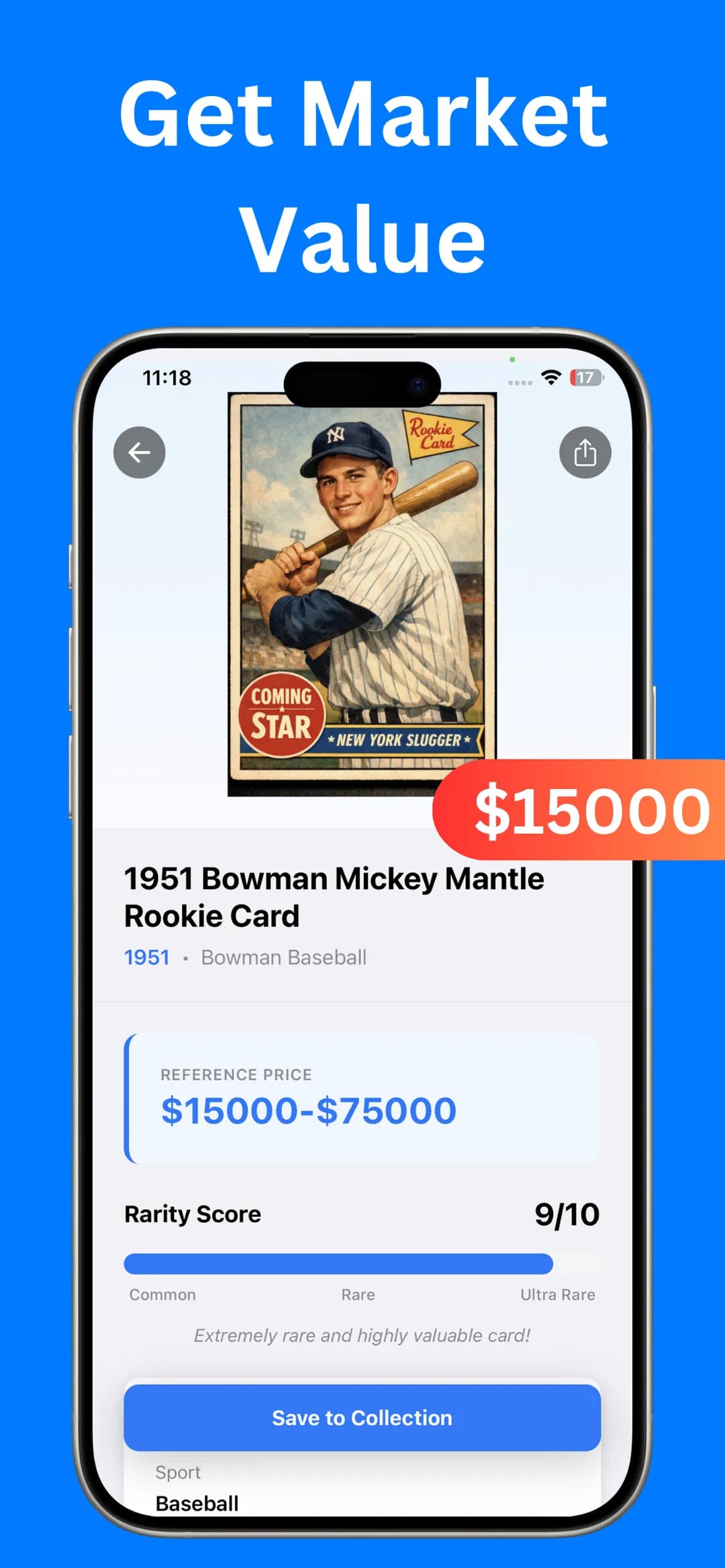
Grading only makes sense for cards worth the fee. Sports Card Value Scanner doesn't grade cards, but a quick scan shows each card's reference price range and rarity score, so you can decide which cards deserve grading before comparing companies. Then read is it worth getting cards graded and how to get cards graded.
Frequently asked questions
Which grading company is best for resale?
PSA, in most cases. PSA slabs usually sell for the most at the same grade and have the most buyers. The main exception is a BGS Black Label, which can sell for more than a PSA 10.
Is SGC as good as PSA?
SGC is a respected grader, especially for vintage cards. For modern cards, SGC slabs often sell for a little less than PSA slabs at the same grade.
What is a BGS Black Label?
A BGS 10 where all four subgrades, centering, corners, edges and surface, are also 10. It's one of the rarest and most valuable grades in the hobby.
Sources

Find out what your cards are worth
Scan your first card in seconds. Get the card details, a reference price range and a rarity score, then build a collection you can track.


4.5★ App Store (75) · 4.4★ Google Play (79) · Free to download