
Article · 5 min read
How Much Is My Football Card Worth?
· By the Sports Card Value Scanner team
Quick answer
A football card's worth depends on the player, whether it's a rookie card, its rarity (parallels, serial numbers, autographs) and its condition. Common base cards usually sell for small change, while rookie cards of star quarterbacks and low-numbered parallels can be worth far more. To check yours, identify the exact card and look at recent sold prices for the same card in similar condition. Or scan it with a football card scanner app like Sports Card Value Scanner for an instant value range and rarity score.
Football card values follow the player more than anything else. Quarterbacks and star skill-position players carry the biggest premiums, Hall of Famers hold their value best, and a player's first licensed cards, usually marked RC, are the ones collectors chase. Modern sets add another layer, because one card can exist as a base version and as dozens of coloured or serial-numbered parallels that sell for very different amounts. Condition matters too, especially on chrome-style cards that scratch and chip easily. Vintage cards from the 1950s through the 1970s are scarcer, while most base cards from the late 1980s and early 1990s were overproduced. To price a specific card, identify the exact version, compare recent sold listings in similar condition, and use a scanner app for a quick first estimate when you have a stack to sort.
| Biggest premiums | Quarterbacks, star skill-position players and Hall of Famers |
|---|---|
| Key cards | Rookie cards (RC), numbered parallels and rookie patch autographs |
| Modern parallels | Panini Prizm and Donruss Optic come in many coloured versions |
| Timing | Demand often rises during the season and playoffs |
| Mostly low value | Late 1980s and early 1990s base cards |
What drives football card values?
Position and player, rookie status, parallels and numbering, autographs, condition and timing drive football card values.
- Position and player. Quarterbacks and star skill-position players tend to command the biggest premiums, and Hall of Famers hold their value best.
- Rookie cards. A player's first licensed cards, often marked “RC”, are usually that player's most sought-after cards.
- Parallels and numbering. Modern sets such as Panini Prizm and Donruss Optic come in many coloured parallels. Serial-numbered versions (like /25) are much scarcer than the base card.
- Autographs and patches. Rookie patch autographs and on-card autographs sit at the top of modern football products.
- Condition. Chrome-style cards show surface scratches and edge chipping easily, which matters if you plan to grade.
- Timing. Prices move with the season, playoff runs, awards and player news.
How do you check a football card's value?
Identify the card, confirm whether it's a parallel, check sold prices for the exact version, then decide whether to keep, sell or grade it.
- 1
Identify it
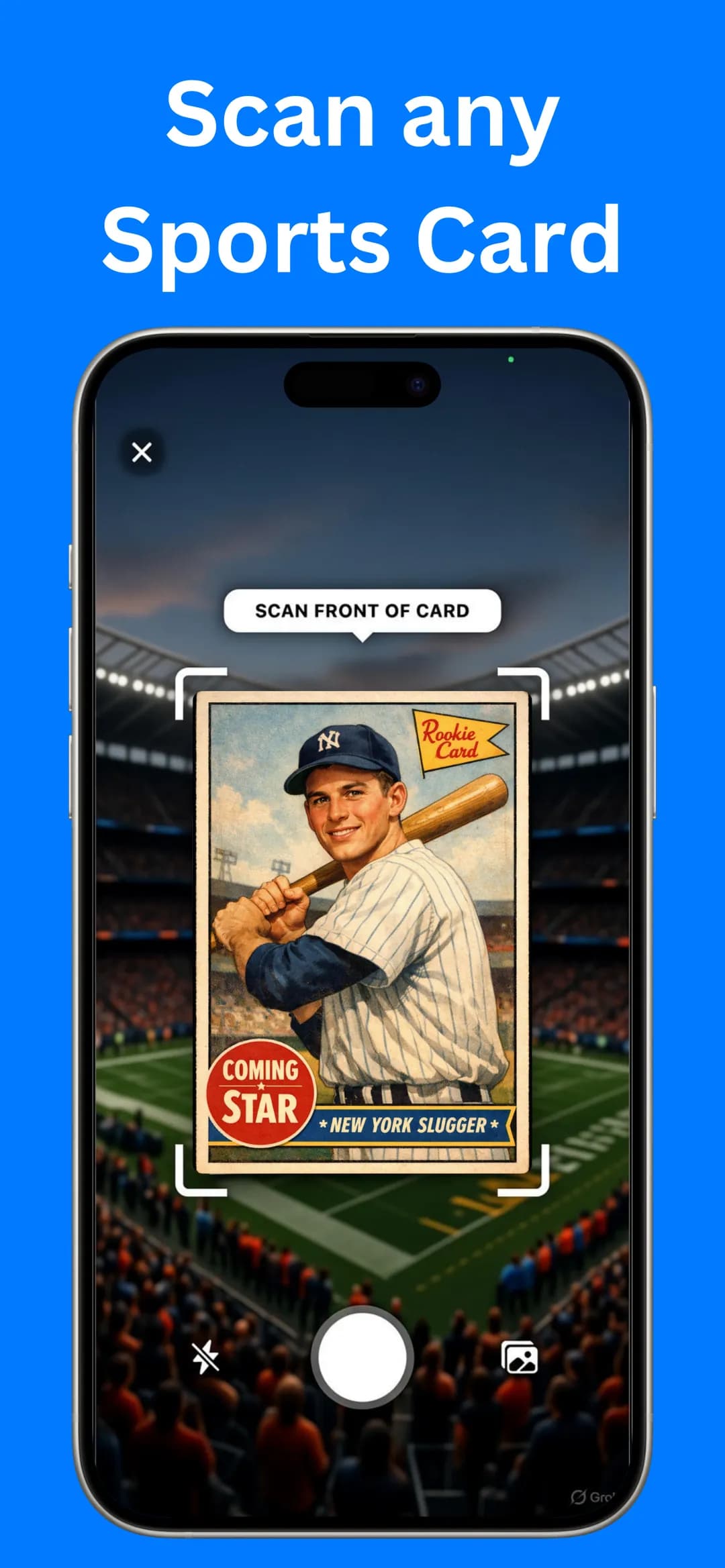
Read the card number and copyright year on the back, and note the brand and set. A scan with Sports Card Value Scanner lists the year, series and card number for you.
- 2
Confirm the version
Compare the border, finish and any serial number with the base card to see whether you have a parallel. Two cards of the same player from the same set can be worth wildly different amounts.
- 3
Check sold prices
Search for the exact card and parallel on eBay, filter to sold listings and compare cards in similar condition. See how to price sports cards on eBay.
- 4
Decide what to do
Keep it, sell it, or, if it's a valuable card in excellent shape, consider professional grading.
How do you use a football card scanner app?
A football card scanner app skips the manual lookup. With Sports Card Value Scanner you frame the front of the card or pick a photo from your gallery. In seconds the app shows the card details, a reference price range, estimated eBay values and a rarity score from Common to Ultra Rare.
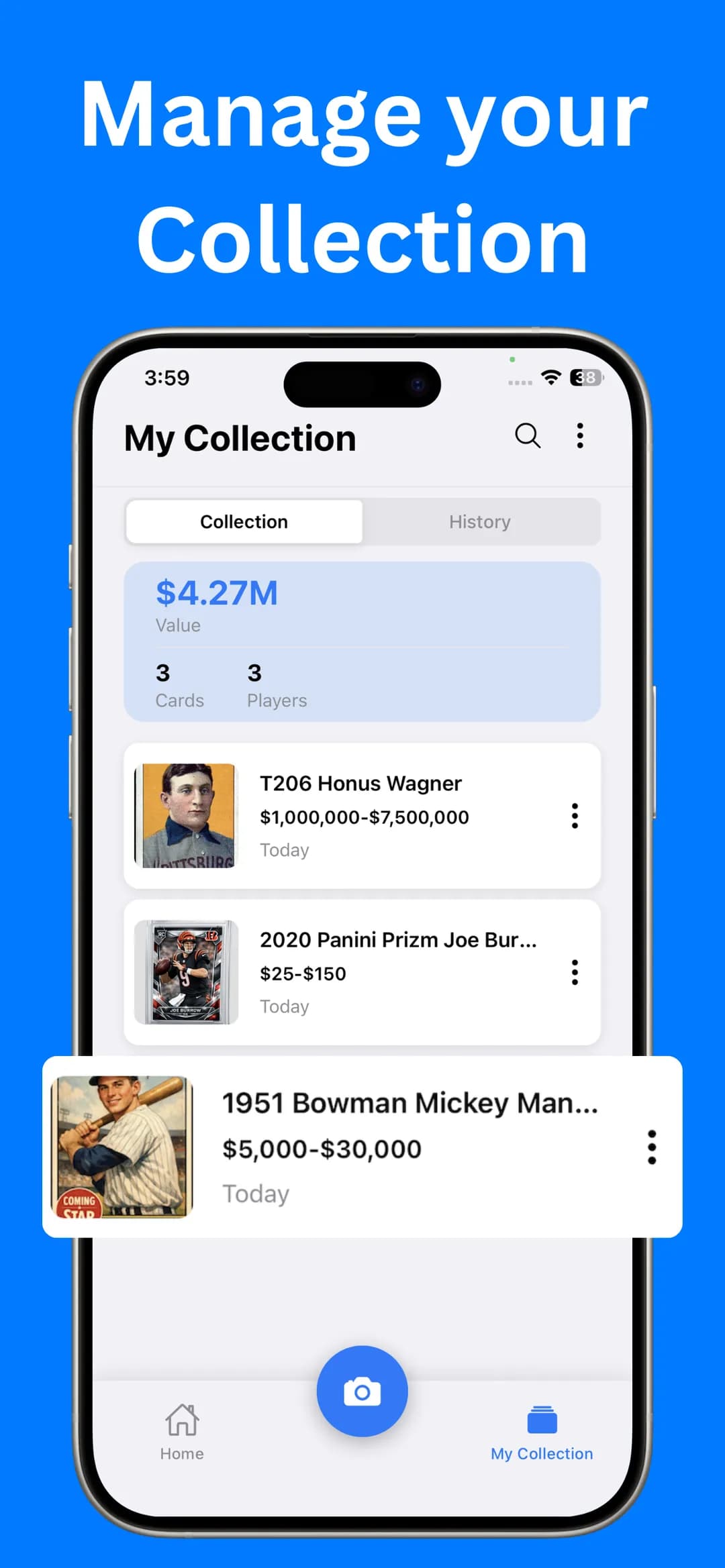
As a football card value app, it also keeps your saved cards in My Collection with their value ranges. You can see what all your football cards are worth together, alongside your baseball and basketball cards.
Are old football cards worth more than modern ones?
Old football cards from the 1950s through the 1970s survive in smaller numbers than modern cards, so their stars and rookies can be valuable even in mid-grade condition. Modern cards depend far more on the exact version. Cards from the late 1980s and early 1990s were overproduced, so most base cards from that period are worth little.
Modern football cards come in many versions. The base card of a player might be inexpensive while a numbered parallel of the same card sells for much more, so always confirm which version you have. For an era-by-era look, read are my old sports cards worth anything?.
What should you do before selling a football card?
Research everything first, protect valuable cards right away, time your sale with the season and photograph both sides clearly.
- Scan everything first. Pull out the cards with high rarity scores and value ranges, and research those in depth.
- Protect valuable cards right away. Use a penny sleeve and a top-loader to keep the edges and corners sharp.
- Mind the calendar. Demand for current players often rises during the season and the playoffs.
- Photograph front and back. Clear photos of corners and centering help buyers trust your listing.
- Know your rookies. First-year cards of breakout players can move quickly. See how much is my rookie card worth.
Collect more than one sport? Compare with baseball card values and basketball card values.
Frequently asked questions
Is there a football card scanner app for iPhone or Android?
Yes. Sports Card Value Scanner works on iPhone and iPad with iOS 15.1 or later, and on Android through Google Play. Scan a football card with the camera or pick a photo from your gallery to see its details, a reference price range and a rarity score.
Are football cards from the 1990s worth anything?
Most base cards from the early 1990s are worth little because of huge print runs. Key rookies in top condition, inserts and parallels can still be valuable, so scan them to find the ones worth researching.
Sources

Find out what your cards are worth
Scan your first card in seconds. Get the card details, a reference price range and a rarity score, then build a collection you can track.


4.5★ App Store (75) · 4.4★ Google Play (79) · Free to download