
Step-by-step guide · 5 min read
What to Do With Old Baseball Cards You Found or Inherited
· By the Sports Card Value Scanner team
Quick answer
Start by doing no harm: stop handling the cards loosely, keep them dry, and don't clean or trim anything. Then sort them by era and pull out stars, rookies and anything from before 1980. Check those cards' recent sold prices, value the rest as bulk, and only then decide whether to keep, sell, give away or donate them. Get more than one offer before you sell a valuable collection.
Finding a box of old baseball cards, in an attic or an inherited estate, raises two questions: is any of this worth money, and what should I do with it? The answer depends on what's in the box. Cards from the 1950s through the 1970s can be valuable even in worn condition, while most cards from the late 1980s and early 1990s were mass-produced and sell for small amounts. Protect the cards first, then sort them and identify the handful that might matter, and check their recent sold prices rather than old price guides. With that knowledge you can choose calmly between keeping the collection, selling the valuable cards and the bulk separately, passing cards to family, or donating the rest. Selling the whole box to the first buyer who asks is the most common way people leave money on the table.
| First step | Protect the cards: cool and dry, no rubber bands, no cleaning |
|---|---|
| Check closely | Anything before 1980, stars, Hall of Famers, rookies, graded or autographed cards |
| Mostly bulk | Base cards from 1987 to 1994 |
| Your options | Keep, sell, give or donate |
| Selling tip | Get offers from more than one buyer |
How should you protect old cards first?
Move them somewhere cool and dry, take off any rubber bands, handle them by the edges, and don't clean, flatten or trim anything.
- Move the cards somewhere cool and dry, away from attics, basements and sunlight.
- Take cards out of rubber bands, and don't stack loose cards tightly.
- Handle cards by the edges with clean, dry hands.
- Don't clean, flatten, trim or write on anything. Any alteration lowers the value and can stop a card from being graded.
- Put anything that looks old or special into a penny sleeve as you go.
Our guide to storing sports cards covers sleeves, top loaders and boxes in more detail.
How do you sort an old card collection?
Sort by sport and then by decade. At this stage, the decade tells you most of what you need to know.
| Era | What to expect |
|---|---|
| Before 1950 | Scarce. Check every card, even damaged ones |
| 1950s–1970s | Stars, rookies and some series can be valuable in any condition |
| 1980–1986 | Mostly modest, with some valuable rookies |
| 1987–1994 | Mass-produced. Most cards are bulk, with a few key exceptions |
| 1995–today | Value sits in inserts, parallels, autographs and numbered cards |
Within each pile, pull out recognisable stars and Hall of Famers, rookie cards, and anything graded, autographed or serial-numbered. Our article on whether old sports cards are worth anything goes through it era by era.
How do you check what old cards are worth?
Identify each key card exactly: the year, brand, player and card number, all printed on the back. Then look up recent sold prices for the same card in similar condition. Old printed price guides and online asking prices tend to run high, so don't anchor on them.
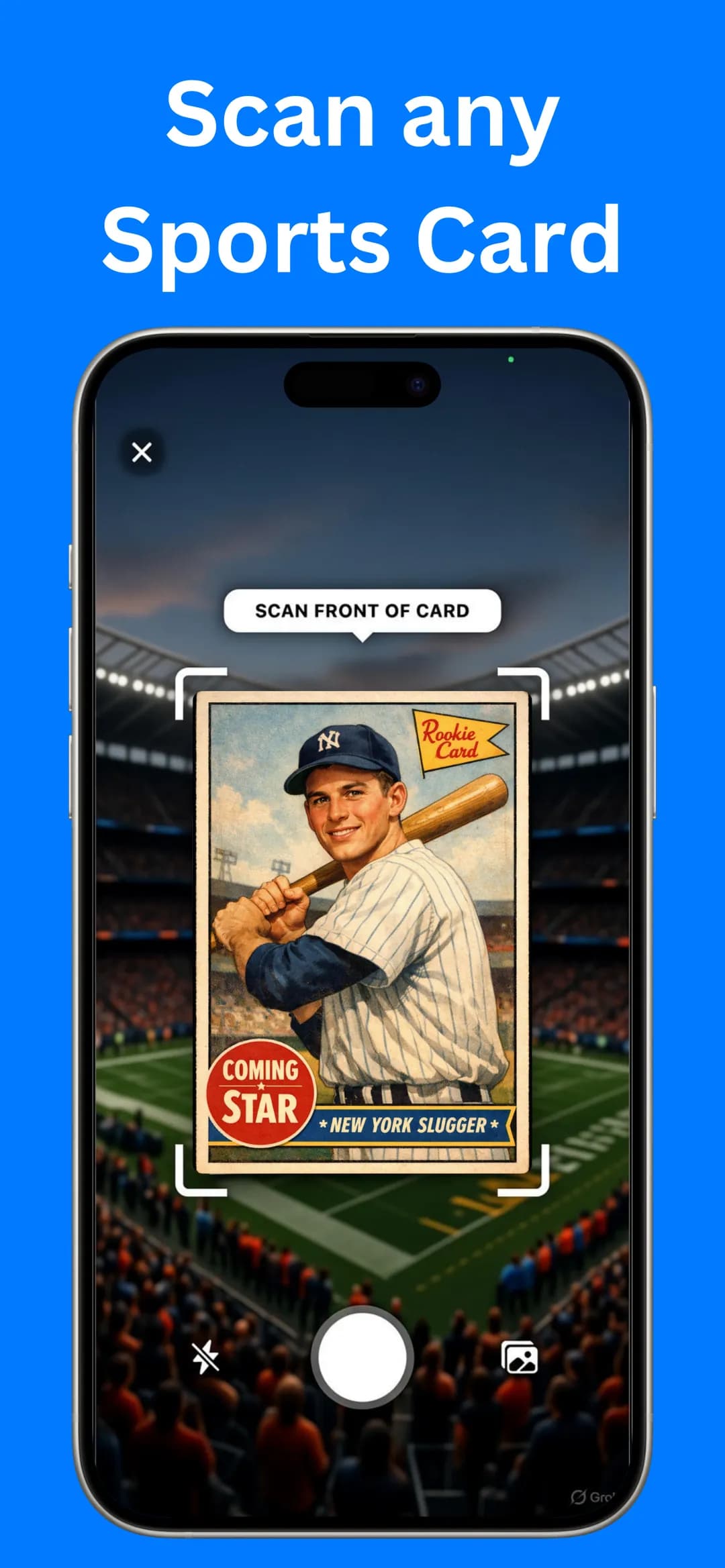
With a lot of cards to get through, a scanner app speeds things up. Scan the front of each card to see the year, set and card number with a reference price range and rarity score, save the promising ones, and check their sold prices in more detail.
What can you do with old sports cards?
Deciding what to do with old sports cards comes down to four choices: keep, sell, give or donate. Most people end up using more than one.
- Keep the cards with family meaning, and store them properly so they last.
- Sell the valuable cards individually and the rest as bulk lots. Our where to sell sports cards comparison lays out the options.
- Give commons to kids, grandkids or a young collector you know. Plenty of people started in the hobby that way.
- Donate bulk to schools, youth clubs or charity shops if selling isn't worth your time.
How should you sell an inherited baseball card collection?
If you've inherited a baseball card collection and plan to sell it, take your time. Get offers from more than one buyer, such as a local shop, a dealer at a card show and an online buyer. Be careful with anyone who offers a quick cash price for the whole box before looking through it. For a large vintage collection, an independent appraisal or a reputable auction house may do better than a single lump-sum offer.
What's the fastest way to see what's in a box of old cards?
Scan them. Sports Card Value Scanner is a quick way through a box of unfamiliar cards. Scan the front of each card, or pick photos from your gallery, and the app shows the card details, a reference price range and a rarity score. Save the cards worth keeping to My Collection to see their combined value as you go.
Frequently asked questions
Are old baseball cards worth anything?
Some are. Cards from before 1980, especially stars and rookies, often have value even when worn. Most cards from the late 1980s and early 1990s were overproduced and are worth little, with a few key exceptions.
Should I get my old baseball cards appraised?
For most collections, sorting and checking sold prices yourself is enough. An appraisal is worth paying for when you need a formal value for insurance or an estate, or when a vintage collection may hold very valuable cards.
Is it OK to clean old cards before selling them?
No. Cleaning, pressing or trimming a card counts as an alteration and lowers its value. Sell cards exactly as they are.
Sources

Find out what your cards are worth
Scan your first card in seconds. Get the card details, a reference price range and a rarity score, then build a collection you can track.


4.5★ App Store (75) · 4.4★ Google Play (79) · Free to download