
Step-by-step guide · 5 min read
How to Start Collecting Sports Cards
· By the Sports Card Value Scanner team
Quick answer
To start collecting sports cards, pick a focus, such as a team, a player, a set or a sport, and set a monthly budget. Buy a few packs or singles of cards you actually like, and learn the basics (rookie cards, parallels, condition) before you spend much. Protect good cards in penny sleeves and top loaders from day one. When you want one specific card, buy it as a single rather than chasing it through packs.
Collecting sports cards is easier to enjoy when you decide early what you're collecting and why. A focus keeps spending under control and makes every pickup feel like progress: a favourite team's cards, one player's rookie card and parallels, a vintage set from the year you were born, or the current season's main set. Packs and boxes are fun, but the odds of pulling a valuable card are low, so many collectors open some packs for the excitement and buy the cards they really want as singles. Learn the core vocabulary, keep good cards protected and buy from reputable sellers. There's plenty of hype in the hobby around hot rookies and investing. Starting with cards you genuinely like means you'll still enjoy your collection when prices cool off.
| First step | Pick a focus: a team, player, set or decade |
|---|---|
| Budget | Set a monthly amount that includes supplies |
| Where to buy | Retail stores, hobby shops, card shows and online marketplaces |
| Protection | Penny sleeves for keepers, top loaders for the best cards |
| Packs or singles | Buy a specific card as a single rather than chasing it in packs |
Step 1: What should you collect first?
Pick one focus to start, such as a team, a player, a set or a decade of vintage cards, so your first purchases have a direction.
- A team. Every card of your team from one season, or from one era.
- A player. Rookie cards, parallels and inserts of a favourite player.
- A set. Build a complete set, such as one year of Topps baseball.
- Vintage. Cards from a decade you care about. Non-star vintage cards are often cheaper than people expect.
You can change focus later. The point is to give your first purchases some direction, so you're not buying random packs and wondering what to do with them.
Step 2: How much should you spend?
Decide what you'll spend each month before you shop, and include supplies in it. It's easy to overspend on cards, especially when a new release is hyped or you're watching live box breaks. A budget also makes the choice between packs and singles clearer.
Where should you start in each sport?
Baseball collectors often start with the yearly Topps flagship set, while football collectors usually start with quarterbacks and rookies.
How to start collecting baseball cards
Baseball has the longest-running sets in the hobby. The yearly Topps flagship set is the traditional starting point, and Bowman is where many collectors look for prospects before they reach the majors. Vintage baseball is also a friendly place to start, since non-star cards from the 1960s and 1970s can be inexpensive.
How to start collecting football cards
Football collecting centres on quarterbacks and rookies, and the season gives you a natural rhythm. Card licences in football and basketball have changed hands in recent years, so check which brands are currently producing licensed cards before you buy a box. Our football card value guide covers what drives prices.
Step 3: Where should beginners buy cards?
Beginners can buy cards at retail stores, local hobby shops, card shows and online marketplaces. Shops and shows are also the best places to ask questions and learn prices.
- Retail stores. Blasters, hangers and value packs in big-box stores are a cheap way to open packs. See hobby box vs retail.
- Hobby shops. Local card shops sell hobby boxes, singles and supplies, and they're the best place to ask questions.
- Card shows. Lots of dealers in one room, good for singles and for learning prices.
- Online marketplaces. The widest choice of singles. Check seller feedback and compare sold prices before buying.
Step 4: Which card terms should beginners learn?
A few terms come up constantly: rookie cards (RC), parallels, serial-numbered cards, inserts, autographs and grading. Our sports card terms glossary explains them in plain English, and parallels, refractors and short prints explained covers the versions that confuse most beginners.
Step 5: How do you protect new cards?
Buy penny sleeves and a pack of top loaders with your first cards. Sleeve anything you'd be upset to damage, top-load the cards that matter most, and store them upright in a box somewhere cool and dry. There's more detail in how to store sports cards.
What mistakes do beginners make?
The most common beginner mistakes are buying hyped rookies at peak prices, treating packs as investments and paying asking prices without checking sold prices.
- Buying a hyped rookie at peak price right after a big game.
- Treating packs as an investment. Most packs return less than they cost.
- Paying asking prices without checking what the card recently sold for.
- Skipping sleeves and top loaders for good cards.
- Buying expensive raw cards from unknown sellers without checking for fakes. See how to tell if a sports card is fake.
How can you check a card before you buy or trade it?
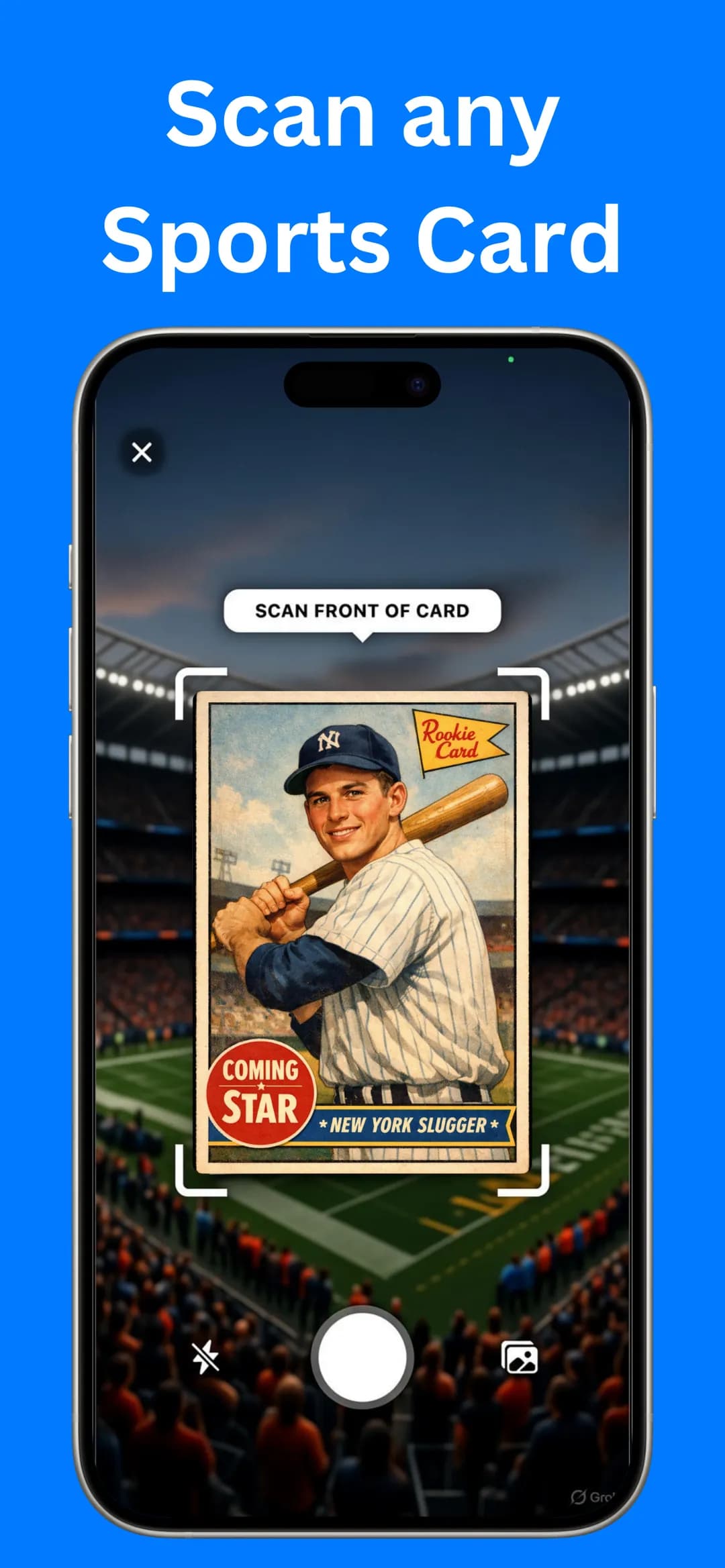
Scan it first with Sports Card Value Scanner. Scan a card at a show, in a shop or straight out of a pack to see its year, set and card number with a reference price range and a rarity score. Saving cards to My Collection keeps track of what you own as your collection grows.
Frequently asked questions
Is collecting sports cards expensive?
It can be as cheap or as expensive as you want. A focus and a monthly budget keep it under control, and buying singles is often cheaper than chasing a specific card through packs.
Should beginners buy packs or singles?
Both have a place. Packs are fun to open; singles are the cheaper way to get a specific card. Many collectors open a few packs for fun and buy the cards they want as singles.
What sports cards should I start collecting?
Start with cards you enjoy, such as your favourite team or player, or the current season's main set. Collecting what you like keeps the hobby fun even when prices move.
Sources

Find out what your cards are worth
Scan your first card in seconds. Get the card details, a reference price range and a rarity score, then build a collection you can track.


4.5★ App Store (75) · 4.4★ Google Play (79) · Free to download