
Step-by-step guide · 4 min read
How to Value a Baseball Card Collection (or Any Sports Cards)
· By the Sports Card Value Scanner team
Quick answer
To value a baseball card collection, sort the cards by era and pull out the stars, rookies, vintage cards and anything numbered or autographed. Price those cards one at a time from recent sold listings for the same card in similar condition. Value everything else as bulk, by the box or by the thousand. Add the two together and you have a realistic number, usually well below what old price guides suggest.
Most card collections follow the same pattern: a small number of cards carry most of the value and the rest is bulk. Valuing a collection well means finding that small group and pricing it carefully, not looking up every common. Start by sorting by sport and era, since cards from before about 1980 deserve a closer look and base cards from roughly 1987 to 1994 rarely do. Pull out recognisable stars, rookie cards, serial-numbered parallels, autographs and anything already graded. Price those individually from recent sold listings that match the card and its condition. Then value the remaining commons as bulk, which sells by the lot rather than per card. For insurance, an estate or a large vintage collection, a paid appraisal can make sense, and you'll get better offers if you already know which cards matter.
| Where the value is | A small share of cards: stars, rookies, vintage, parallels and autographs |
|---|---|
| Price key cards from | Recent sold listings for the same card in similar condition |
| Bulk | Commons sell by the box or by the thousand |
| Junk wax era | Most 1987 to 1994 base cards are bulk |
| Appraisal | Worth it for insurance, estates or large vintage collections |
Step 1: How should you sort a collection before pricing it?
Sort by sport, then by decade, then by set if you can, because pricing an unsorted box card by card wastes hours on cards worth pennies. You'll quickly see what you're dealing with, and the cards that stand out will start to jump out at you.
- Before 1980: check these carefully, even if they're worn.
- 1980 to 1986: mixed, with some valuable rookies among plenty of modest base cards.
- 1987 to 1994: the junk wax era. Most base cards are bulk, though key rookies in top condition and certain errors are exceptions.
- 1995 to today: look for inserts, parallels, serial numbers, autographs and memorabilia cards.
For more on what each era is usually worth, read are my old sports cards worth anything?
Step 2: Which cards carry a collection's value?
A small group carries most of the value: stars and Hall of Famers, true rookie cards, low print runs, parallels, autographs and cards in strong condition.
Go through each pile and pull out cards that match the clues in how to tell if a sports card is valuable: star or Hall of Fame players, true rookie cards, low print runs, parallels, autographs and strong condition. Sleeve these as you go. In most collections this pile is a few percent of the total, sometimes less.
Graded cards are the easy part. Look up the certification number on the grader's website to confirm the grade, then price the slab.
Step 3: How do you price the key cards?
For each key card, find recent sold prices for the same card, the same version and similar condition. eBay's sold listings are the biggest public record, and our guide to pricing sports cards on eBay shows how to search them. Work from the middle of recent sales, not the highest one. Be honest about condition, because a raw card with soft corners won't sell like a sharp one.
Step 4: How do you value bulk cards?
Commons and base cards sell by the lot, not individually. Dealers often price bulk by the box or by the thousand, and offers for junk wax era commons are low because supply is enormous. Sorted bulk, such as complete sets or team lots, tends to sell better than a random box. Count roughly how many cards you have and treat that number as a small add-on to the value of your key cards.
Step 5: Do you need a professional appraisal?
For most collections, your own research is enough. A paid appraisal is worth considering for insurance, estate paperwork or a large vintage collection where a few cards could be worth thousands. Ask how the appraiser is paid, and be wary of anyone who appraises a collection and then offers to buy it.
Can a scanner help you value sports cards faster?
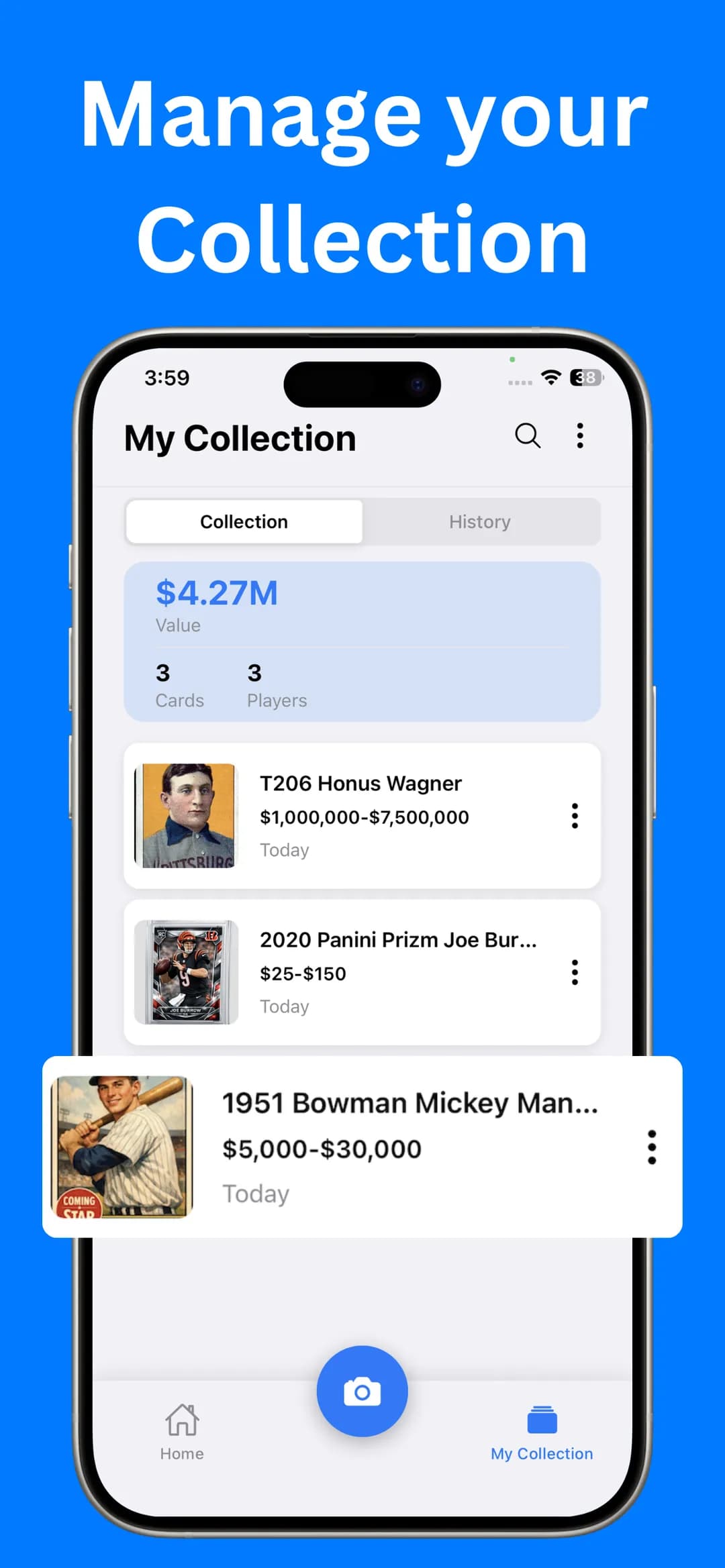
Yes. If you're working out how to value sports cards quickly, scanning cuts most of the lookup time out of steps 2 and 3. With Sports Card Value Scanner you scan each card, check its year, set and reference price range, and save it to My Collection. The collection screen shows the combined value of your saved cards and how many cards and players you have. When you're done, export the list of scanned cards to a file to keep a record for insurance or an appraiser.
Frequently asked questions
How much is my sports card collection worth?
Usually less than people expect, and more than nothing. The value sits in a small number of cards: stars, rookies, vintage cards, parallels and autographs. Price those individually from recent sold listings, value the rest as bulk, and add the two together.
Who buys sports card collections?
Local card shops, dealers at card shows, online buyers and auction houses all buy collections. Shops and dealers pay below retail because they need to resell, so know your key cards' values first. See where to sell sports cards.
Should I price every card in my collection?
No. Pricing commons one by one takes far longer than they're worth. Price the key cards individually and value the rest by the box or by the thousand.
Sources

Find out what your cards are worth
Scan your first card in seconds. Get the card details, a reference price range and a rarity score, then build a collection you can track.


4.5★ App Store (75) · 4.4★ Google Play (79) · Free to download