
Article · 5 min read
Is It Worth Getting Cards Graded?
· By the Sports Card Value Scanner team
Quick answer
Getting a card graded is worth it when the price of the card in the grade you expect, minus the grading fee, shipping and insurance, is clearly higher than what it sells for raw. That usually means valuable cards in excellent condition: key rookies, vintage stars, autographs and scarce parallels. For most base cards and commons, grading costs more than it adds. It can also be worth it to prove a valuable card is genuine.
Grading adds value in two ways. It puts a trusted number on the card's condition, and it confirms the card is genuine and unaltered. Buyers pay for that certainty, which is why the same card can sell for far more in a high grade than raw. But grading has costs: the fee, shipping both ways, insurance and weeks or months of waiting. There's also the risk that the card grades lower than you hoped, and for many modern cards only a top grade sells for much more than a raw copy. The simple test is to look up recent sold prices for your card raw and in the grades it could realistically get, subtract the total cost of grading, and see whether the result beats selling it raw. If you're keeping a card, protection and authentication can justify grading even when the math is close.
| Rule of thumb | Grade when the graded price minus costs clearly beats the raw price, even one grade lower |
|---|---|
| Costs to include | Grading fee, shipping both ways and insurance |
| Usually worth it | Star rookies, vintage stars, autographs and low-numbered parallels in top shape |
| Usually not worth it | Commons, flawed cards and cards where a 9 sells near the raw price |
How do you work out if grading is worth it?
Compare the raw price with the graded price at your likely grade, minus grading, shipping and insurance. If the graded price still clearly wins, even one grade lower, grading probably pays.
- 1
Find the raw price
Look up recent sold listings for the card ungraded, in similar condition.
- 2
Estimate the likely grade
Check centering, corners, edges and surface honestly. Most cards that look perfect at a glance still have small flaws. The PSA grading scale shows what each grade allows.
- 3
Find graded prices
Look up sold prices for the same card at the grade you expect, and at one grade lower.
- 4
Subtract the costs
Take off the grading fee, shipping both ways and insurance. Check the grader's current price list, since fees change.
- 5
Compare
If the graded price minus costs is comfortably above the raw price, even one grade below your hope, grading probably pays.
Which cards are usually worth grading?
Grading usually pays for star and Hall of Fame rookies in excellent condition, vintage cards of popular players, autographs, low-numbered parallels and valuable cards you plan to sell.
- Rookie cards of stars and Hall of Famers in excellent condition.
- Vintage cards of popular players, where even mid grades sell well.
- Autographs and low serial-numbered parallels of in-demand players.
- Valuable cards you plan to sell, where buyers want proof of condition and authenticity.
Is it worth getting baseball cards graded?
It's worth getting baseball cards graded when they're in-demand vintage cards or key rookies in excellent condition. Baseball follows the same math as other sports, with one twist. Vintage baseball has the deepest graded market, so in-demand cards from the 1950s through the 1970s often sell better graded, even in mid grades. Junk wax era baseball cards from about 1987 to 1994 are the opposite: most aren't worth grading unless they're key rookies with a real chance at a top grade. See valuable baseball cards from the 80s and 90s.
Is it worth getting sports cards graded for your own collection?
If you're not selling, grading still has benefits. The slab protects the card, the grade and certification make it easier to insure, and a future sale is simpler. Many collectors grade only their favourite or most valuable cards for that reason and keep the rest in top loaders.
When isn't grading worth it?
Grading usually isn't worth it for commons from mass-produced sets, cards with visible flaws, cards where a 9 sells for about the raw price, or when you need the money soon.
- Base cards and commons from mass-produced sets, even of stars.
- Cards with visible flaws: creases, soft corners, poor centering or surface scratches.
- Cards where 10s are common and a 9 sells for about the raw price.
- When you need the money soon, since turnaround can be long. PSA's 2026 queue is an example: see our PSA grading backlog update.
How do you pick which cards to check?
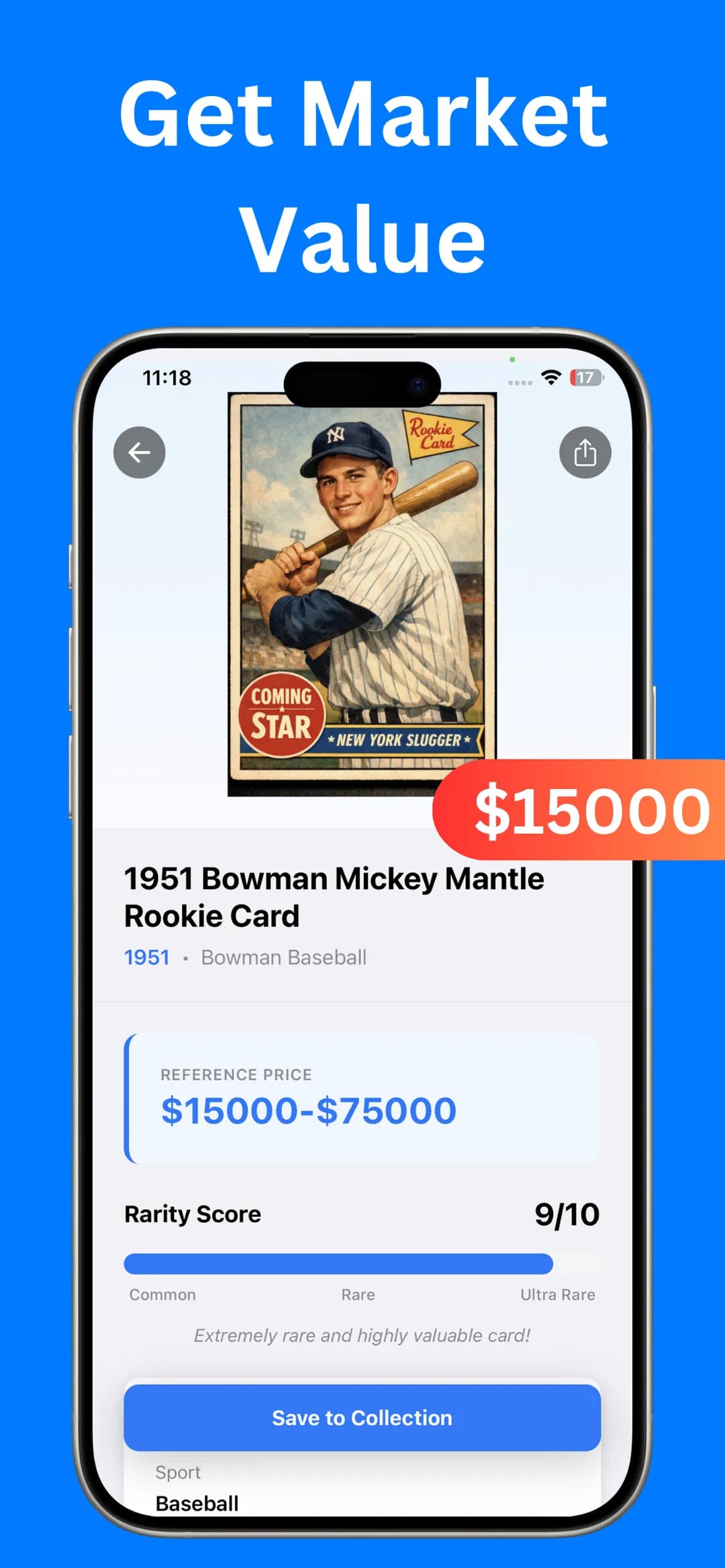
Start with the cards that have the highest value ranges and rarity scores, because picking the few cards worth checking is the hardest part. Sports Card Value Scanner doesn't grade cards, but scanning a stack shows each card's reference price range and rarity score. That lets you quickly set aside the cards with enough value to run the math above. Then compare graders in PSA vs BGS vs SGC and follow how to get cards graded.
Frequently asked questions
How much does it cost to get a card graded?
It depends on the company, the service level and the card's declared value, and prices change often. Check the grading company's current price list, and remember to add shipping and insurance.
Do graded cards sell for more?
In high grades, usually yes, because buyers pay for verified condition and authenticity. In low grades, a graded card may sell for about the same as a raw one.
Should I grade a card worth $20 raw?
Usually not. Unless it has a real chance at a top grade that sells for much more, the grading fee and shipping will eat most of the value.
Sources

Find out what your cards are worth
Scan your first card in seconds. Get the card details, a reference price range and a rarity score, then build a collection you can track.


4.5★ App Store (75) · 4.4★ Google Play (79) · Free to download