
Article · 5 min read
1991 Topps Baseball Cards Worth Money
· By the Sports Card Value Scanner team
Quick answer
Most 1991 Topps baseball cards are worth little because they were printed in huge numbers. The valuable ones are the Desert Shield versions, stamped with a gold foil logo and sent to US troops, which are scarce and worth far more than regular cards, plus high-grade copies of the Chipper Jones rookie #333, Ken Griffey Jr. #790 and Nolan Ryan #1. A few scarce variations, such as the Mark Whiten #588 and Chris Hoiles #42, are worth checking too.
The 1991 Topps set has 792 cards and a “Topps 40 Years of Baseball” logo marking the company's 40th anniversary. Like other sets from the junk wax era, it was printed in huge numbers, so regular cards are plentiful and cheap unless they're in gem mint condition. The exception that makes the year special is Desert Shield. Topps produced a version of the set for US troops serving in the Gulf, identical to the regular cards except for a gold foil Operation Desert Shield logo on the front. Estimates put the run at roughly 6,300 to 7,000 copies of each card, and many were opened and handled overseas, so Desert Shield stars and rookies sell for many times their regular versions. The Chipper Jones rookie is the key card either way: Old Sports Cards lists a regular PSA 10 at about $150, while The Collector Nation puts a Desert Shield PSA 10 at around $10,000 or more. Griffey, Ryan and a handful of variations round out the list.
| Set size | 792 cards, with a Topps 40 Years of Baseball logo |
|---|---|
| Desert Shield | Gold foil Operation Desert Shield logo; roughly 6,300 to 7,000 of each card |
| Key rookie | Chipper Jones #333 |
| Top regular card (PSA 10) | Ken Griffey Jr. #790, about $200 to $225 |
| Values as of | Old Sports Cards, updated September 2, 2026 |
Why aren't most 1991 Topps cards worth much?
1991 sits in the middle of the junk wax era. Topps printed enormous runs, and collectors saved the cards in good shape, so a regular common sells for cents and even star cards usually need a top grade to be worth much. Our article on are old sports cards worth anything covers how print runs drive value by era.
What are 1991 Topps Desert Shield cards?
1991 Topps Desert Shield cards were made for US troops deployed in the Gulf during Operation Desert Shield. They match the regular 1991 Topps cards front and back, except for a gold foil logo of a palm tree and shield, reading “Operation Desert Shield”, stamped near the top right corner of the front.
- Print run: a 1990 Topps memo cited by Sports Collectors Digest put production at 500 cases, a little over 6,800 of each card. Beckett cites an estimate of about 6,300 sets.
- Survival: packs were opened and handled by soldiers in the desert, so clean, high-grade copies are much scarcer than the print run suggests.
- Value: Desert Shield cards sell for many times their regular versions, and Desert Shield rookies and stars can bring thousands in high grade.
What are the most valuable 1991 Topps baseball cards?
Desert Shield versions of stars and rookies are the most valuable, led by Chipper Jones. Among regular cards, high-grade Ken Griffey Jr. #790, two scarce variations and Nolan Ryan #1 lead the list.
| Card | Why it matters | PSA 10 value |
|---|---|---|
| #790 Ken Griffey Jr. | Most valuable regular card in the set | About $200 to $225 |
| #588 Mark Whiten, hand over border | Scarce variation | About $175 to $200 |
| #42 Chris Hoiles, white inner frame | Scarce variation | About $175 to $200 |
| #1 Nolan Ryan | First card in the set | About $175 to $185 |
| #333 Chipper Jones | Rookie card | About $145 to $155 |
| #392 Ken Griffey Jr. All-Star | All-Star subset | About $85 to $95 |
| #180 Tony Gwynn | Hall of Famer | About $85 to $90 |
| #79 Frank Thomas | Second-year Topps card | About $60 to $65 |
Those are PSA 10 prices. Raw copies of the same cards usually sell for a few dollars. The Desert Shield version of any card on this list is worth far more; The Collector Nation puts a Desert Shield Chipper Jones in PSA 10 at around $10,000 to $16,000.
Which 1991 Topps variations and errors should you look for?
Look for the Mark Whiten #588 with his hand over the border, the Chris Hoiles #42 with a white inner frame and the Mark McGwire #270 slugging error.
- Mark Whiten #588: on the scarce version, his hand extends over the left border.
- Chris Hoiles #42: the scarce version has a white inner frame instead of the usual dark one.
- Mark McGwire #270: an error version lists his slugging percentage as “618”, without the decimal point.
Variations like these only carry a premium in the scarce version, so compare your card with the regular one before you price it. Our list of error cards worth money explains how corrected errors become collectible.
How much is the 1991 Topps Chipper Jones rookie worth?
The 1991 Topps Chipper Jones #333 is worth about $145 to $155 in PSA 10 per Old Sports Cards, and far more in its Desert Shield version. It's the key rookie in the set and the card most collectors look for first. In regular form it's common, and high grades carry the value. In Desert Shield form it's one of the most sought-after cards of the early 1990s. Read how much is my rookie card worth for what drives rookie prices in general.
How can you sort a 1991 Topps box quickly?
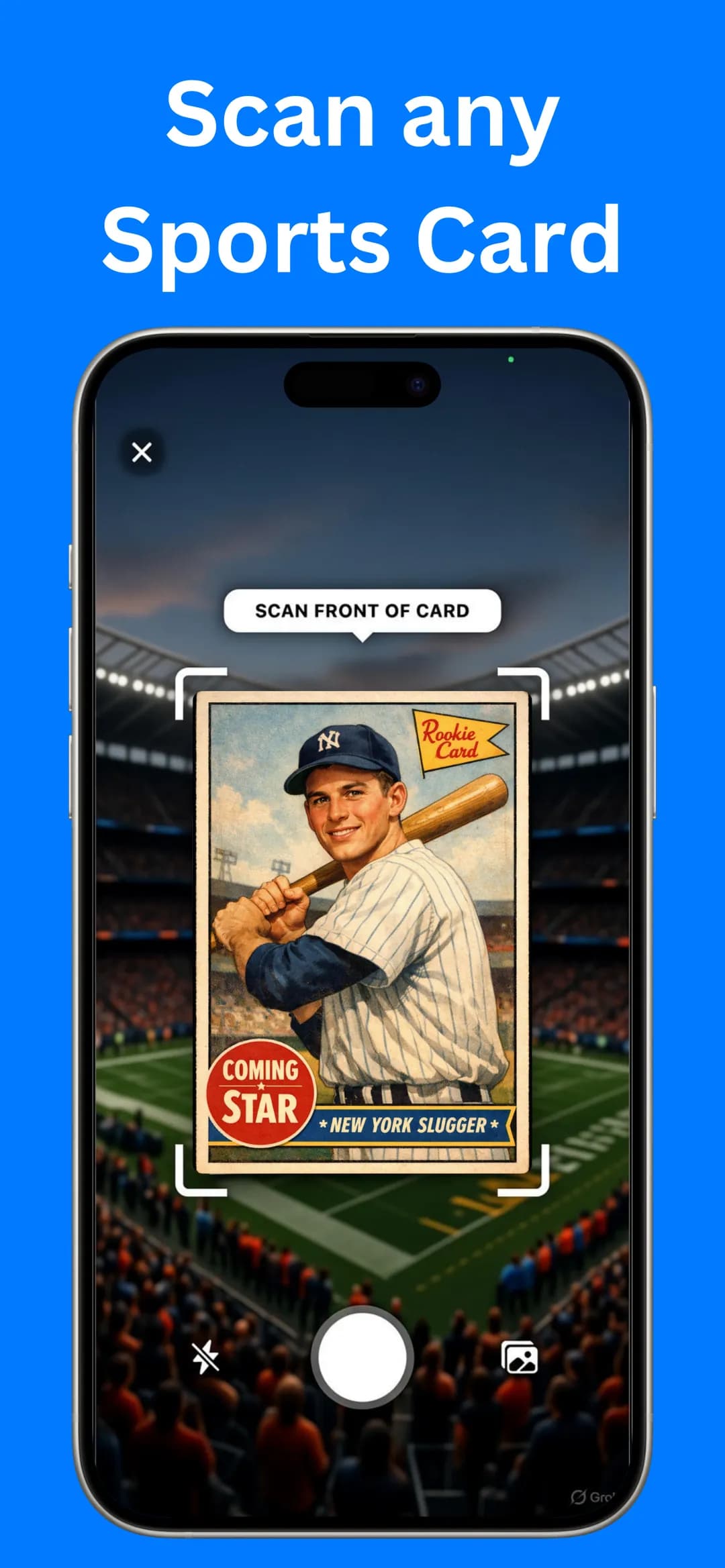
Scan the cards: Sports Card Value Scanner identifies each card from a photo and shows its year, set and card number with a reference price range and rarity score, so the stars and rookies stand out from the commons. Save the keepers to My Collection, then check each one by eye for a gold Desert Shield logo or a known variation.
Frequently asked questions
How can I tell if my 1991 Topps card is Desert Shield?
Look for a gold foil logo of a palm tree and shield reading “Operation Desert Shield” near the top right of the front. Without the logo, it's a regular 1991 Topps card.
What is the most valuable 1991 Topps card?
Desert Shield versions of stars and rookies, led by the Chipper Jones #333, are the most valuable. Among regular cards, high-grade Ken Griffey Jr. #790 and Nolan Ryan #1 lead the list.
Are 1991 Topps cards worth grading?
Desert Shield stars and rookies usually are. Regular cards only make sense if they're sharp enough for a PSA 10, since lower grades rarely cover the fee.
Sources

Find out what your cards are worth
Scan your first card in seconds. Get the card details, a reference price range and a rarity score, then build a collection you can track.


4.5★ App Store (75) · 4.4★ Google Play (79) · Free to download