
Article · 5 min read
What Is a Parallel Card? Parallels, Refractors and Short Prints Explained
· By the Sports Card Value Scanner team
Quick answer
A parallel card is a version of a base card with the same design and card number but a different colour, finish or border, printed in smaller numbers. A refractor is a parallel with a shiny, rainbow-like chrome finish. Many parallels are serial-numbered, like 25/99, to show how many exist. A short print is a card printed in smaller quantities than the rest of the set, often with no marking. All three are usually worth more than the base card.
Modern sports card sets are built in layers. The base set is the standard version of every card. Parallels repeat those base cards with a change you can see once you know to look for it: a coloured border, a foil or chrome finish, a pattern or a stamped serial number. Refractors are the chrome versions that throw off a rainbow effect, introduced by Topps Finest in 1993 and now common in chrome sets. Serial numbering tells you the print run, so a card stamped 10/25 is the tenth of 25 copies, and lower print runs usually mean higher prices. Short prints are different. They're cards, or photo variations of cards, printed in smaller numbers, often with no marking at all, so you need a checklist or a code on the back to spot them. Knowing which version you have matters, because the same player's card can be worth cents or a lot of money depending on it.
| Parallel | Same design and number as the base card, with a different colour, finish or border |
|---|---|
| Refractor | A chrome parallel with a rainbow shine, introduced in 1993 Topps Finest |
| Serial number | Shows the print run, such as 23/99 |
| Short print (SP) | Printed in smaller numbers, often unmarked |
| Value rule | Lower print runs usually mean higher prices |
What is a parallel card?
A parallel card is a base card reprinted with a different colour, finish or border, usually in smaller numbers. The front design, player and card number stay the same, which is exactly why parallels are easy to mistake for base cards.
- Colour parallels: a coloured border or background, usually named after the colour (Gold, Blue, Green).
- Finish parallels: foil, chrome, holographic or patterned surfaces.
- Numbered parallels: stamped with a serial number such as 45/199.
- One of ones: a single copy, usually stamped 1/1.
What is a refractor card?
A refractor is a parallel with a reflective chrome finish that throws off a rainbow when you tilt it in the light. Topps introduced refractors in its 1993 Finest baseball set, and they're now standard in chrome products. Many chrome sets have a ladder of refractors, from plain refractors up through coloured and numbered versions, with the rarest at the top. Tilting the card under a lamp is the easiest way to tell a refractor from a regular chrome base card.
What do serial numbers on cards mean?
A stamped serial number shows a card's place in a limited print run, so 23/99 means it's the 23rd of 99 copies. Lower print runs are scarcer and usually worth more. Some collectors also pay extra for a number that matches the player's jersey number, or for the last copy, such as 99/99. Unnumbered parallels can still be scarce, but you'll need the set's odds or checklist to know how scarce.
What is a short print card?
A short print (SP) is a card printed in smaller numbers than the rest of a set, and super short prints (SSP) are rarer still. In older sets, short prints were often a side effect of how print sheets were laid out. In modern sets, they're usually deliberate photo variations: the same card number with a different picture, such as a player in a throwback uniform. Because short prints often carry no marking, collectors check the set checklist, or a code printed on the back, to confirm them.
How can you tell which version of a card you have?
Compare it with the base version: check the border colour and finish, tilt it for a refractor shine, look for a serial number and check the set's checklist.
- 1
Compare it with the base card
Look at the border colour, the finish and the background. Base cards in chrome sets are shiny too, so tilt the card and look for the rainbow refractor effect.
- 2
Look for a serial number
Check the front and back for a stamped number.
- 3
Check the back
Some sets print the parallel's name, or a code that marks a variation.
- 4
Use the checklist
Search the set name with “parallels” or “checklist” to see every version that exists.
How do parallels affect value?
For a popular player, the base card might sell for very little while a low-numbered parallel sells for many times more, and a 1/1 can be worth far more again. Pricing the wrong version is one of the most common mistakes collectors make. When you search sold listings, include the parallel name and the serial number in the query. Our guide to pricing sports cards on eBay shows how, and how to tell if a sports card is valuable covers the other clues.
Can a scanner app tell a parallel from a base card?
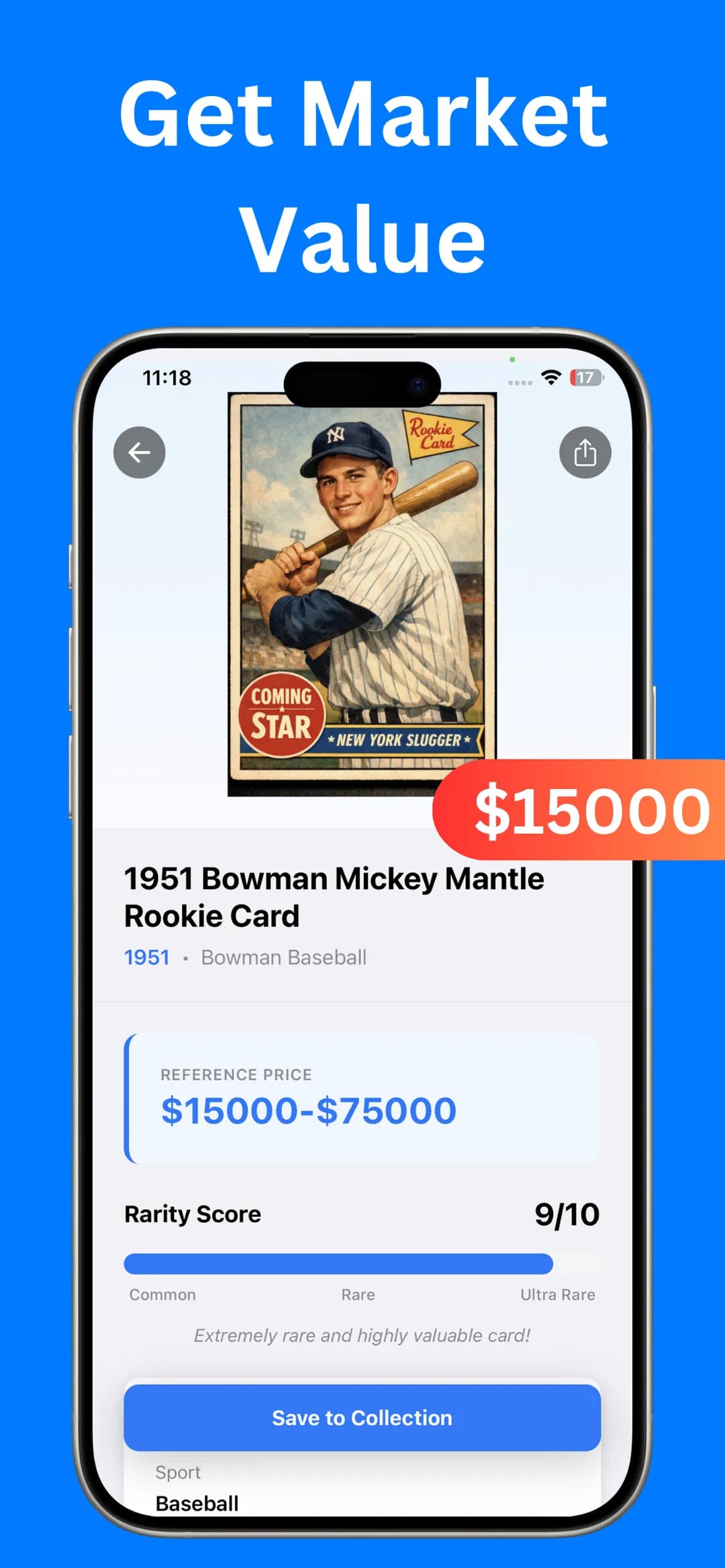
Not always. Sports Card Value Scanner identifies the card from a photo and shows its year, set and card number with a reference price range and a rarity score. Parallels can look almost identical to base cards in a photo, so confirm the border, finish and any serial number by eye before you rely on a price. Our sports card terms glossary explains the other labels you'll come across.
Frequently asked questions
Are parallel cards worth more?
Usually, yes. Parallels are printed in smaller numbers than base cards, and numbered or one-of-one parallels of popular players can be worth many times the base card.
What does /99 mean on a card?
It means the card is serial-numbered out of 99 copies. A card stamped 12/99 is the 12th of 99.
What's the difference between SP and SSP?
SP means short print, a card printed in smaller numbers than the rest of the set. SSP means super short print, which is rarer still.
Sources

Find out what your cards are worth
Scan your first card in seconds. Get the card details, a reference price range and a rarity score, then build a collection you can track.


4.5★ App Store (75) · 4.4★ Google Play (79) · Free to download